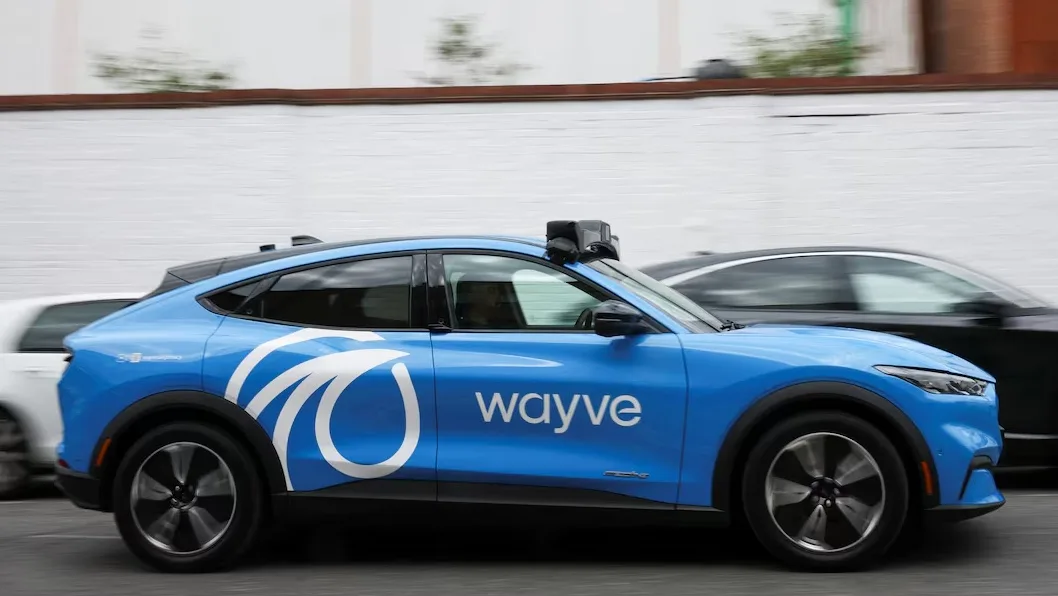
Wayve and Uber launched supervised autonomous rides across London on September 3, 2026, making the first autonomous trips available to the UK public. The service covers the city but excludes airports, the companies said in a joint press release.
The rollout gives the public its first access to Wayve’s AI Driver in London, where the company said it has trained its technology on local roads since 2018. London is also the first of 12 markets covered by a Wayve-Uber partnership that included an investment from Uber.
People requesting UberX, Uber Electric or Uber Comfort may be offered a Wayve vehicle at no additional cost. The app displays the fare upfront, and riders can accept the Wayve car or switch to a non-autonomous Uber before dispatch.
More than 140,000 Londoners have changed their Uber trip preferences to improve their chances of receiving a Wayve car, the companies said. Transport for London granted private hire licences to 15 of the vehicles in August 2026. Wayve and Uber said the fleet will expand according to demand, operational readiness and regulation.
The service uses all-electric Ford Mustang Mach-E vehicles fitted with the Wayve AI Driver, cameras, radar and other surrounding sensors. A trained private hire driver licensed by Transport for London remains onboard to supervise each trip.
Riders use the Uber app to open the doors and begin the ride after the car arrives. An interactive screen designed by Uber displays the planned route and supports 64 languages.
Wayve describes its AV2.0 system as an AI Driver that learns from experience instead of depending on high-definition maps or hand-coded rules. Alex Kendall and Amar Shah founded the London company in 2017 while studying for their PhDs at the University of Cambridge.
Wayve raised a $1.2 billion Series D at an $8.6 billion post-money valuation in February 2026. Uber participated in the round, and Wayve said it had secured $1.5 billion when additional milestone-based capital from Uber was included.
Removing the supervising driver would require approval through a separate Driver and Vehicle Standards Agency process. That approval is considered unlikely in 2026, according to The Guardian.