Periodic Labs has reportedly open-sourced Neon, a 1-trillion-parameter model trained on its experimental lab data. Founder Liam Fedus said the company used 1,300 H200 GPUs and months of experimental data to mid-train a model.
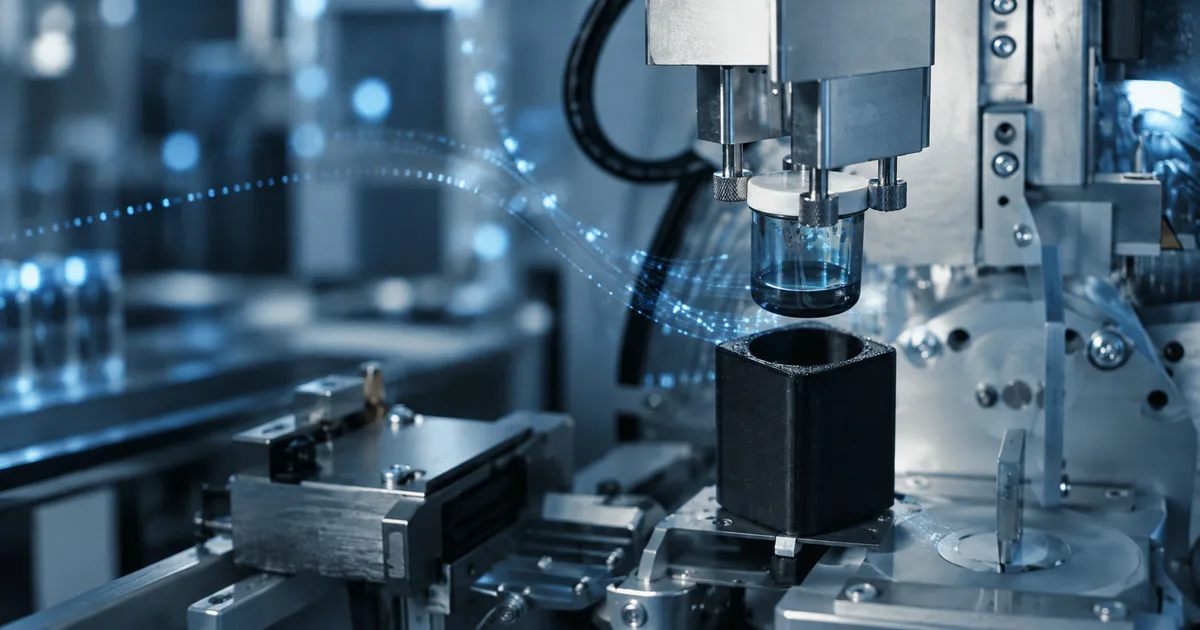
Fedus said in a post on X that Periodic Labs built high-throughput materials labs in Menlo Park. The labs produce fresh data for its models, which then help determine the next experiments to run.
That loop is central to the company’s approach: physical experiments create proprietary data, and the models use it to guide more experiments. Fedus’s post text is truncated after his statement about mid-training.
Secondary aggregator reporting describes the resulting model as Neon, trained through mid-training and reinforcement learning on the company’s lab data and released as open-source or open-weight. Secondary aggregator reporting also says Neon exceeded GPT-6 Astra on Periodic Labs’ internal analysis benchmark.
Another report attributed to Fedus said the system improved accuracy on a hard X-ray diffraction analysis benchmark from 2.7% to 55.3% across 134 samples. Rohan Pandey, a Periodic Labs research engineer, said the model outperformed tools including Astra and Fable at analyzing experimental data and was rated highly by lab scientists using it.
Periodic Labs was founded in 2025 by Fedus, a former OpenAI VP of Research, and Ekin Doğuş Çubuk, formerly of Google DeepMind and Google Brain. The company raised a $300 million seed round.
Periodic Labs says it pairs AI models trained on scientific literature and lab data with automated experimentation to hypothesize, synthesize and test materials. Its early flagship goal is discovering higher-temperature superconductors.