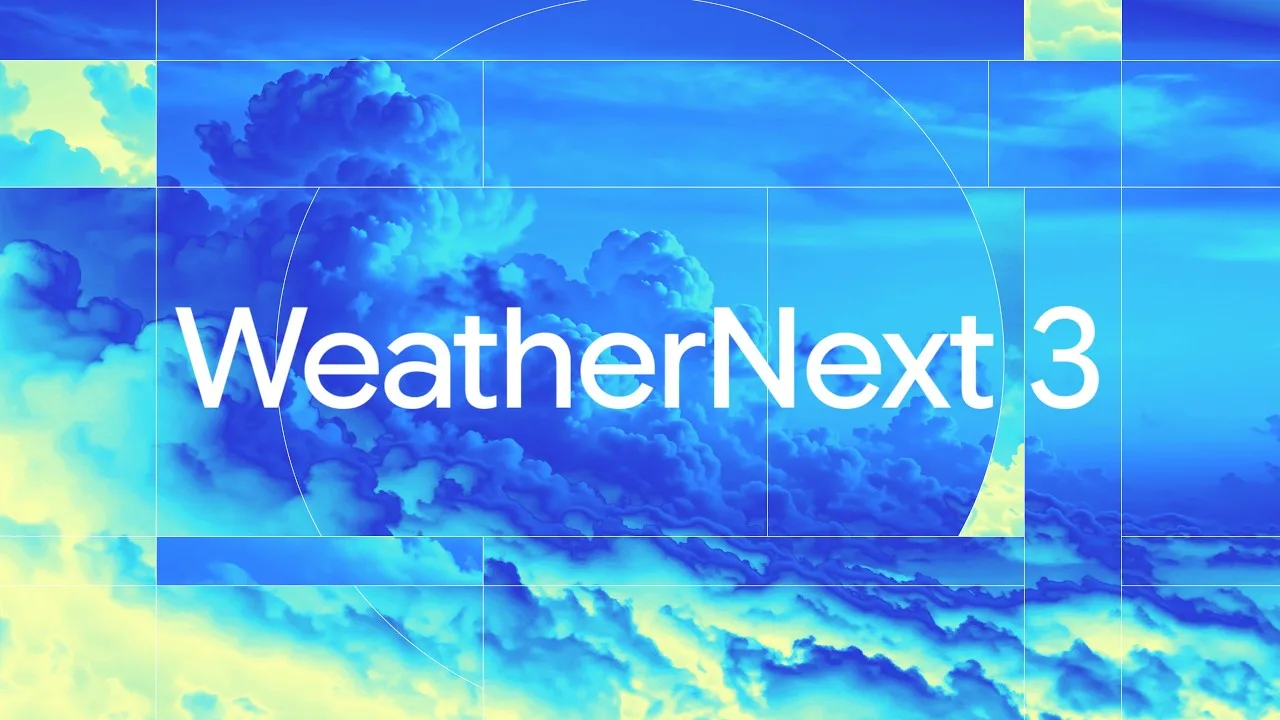
On Sept. 3, 2026, Google DeepMind said in a post on X that WeatherNext 3 would power forecasts in Google Search, the Gemini app, Google Maps and Google Maps Platform. The model produces a new global forecast every hour using live geostationary satellite data.
A Google blog post said the rollout would start that day. DeepMind said the products and tools receiving the model are used by billions of people. Developers and researchers can also access real-time WeatherNext 3 data through BigQuery, Earth Engine and Google Cloud Storage.
WeatherNext 2 produced forecasts every six hours on a 25-kilometer grid. WeatherNext 3 maps temperature and moisture at 5-kilometer resolution, other surface variables at 10 kilometers, and atmospheric variables such as wind speed at 25 kilometers. Google DeepMind said that provides a global weather picture roughly five times sharper than the previous model.
The company said live satellite data enables the hourly refresh, compared with a six-hour data lag for numerical weather prediction models. WeatherNext 3 also trains directly on weather station observations, allowing its 5-kilometer global forecasts to account for local topography.
Developer documentation last updated Sept. 3, 2026, lists 24 initializations a day and 64 ensemble members. Six-hourly cycles extend 15 days, while interim hourly runs cover 48 hours. DeepMind calls WeatherNext 3 the first global weather model to generate forecasts every hour of the day.
For people planning at least a day ahead, the company said precipitation forecasts in Google products are up to 50 percent more accurate. In medium-range tests, it reported Continuous Ranked Probability Score improvements of up to 60 percent against IMERG, 30 percent against MRMS and 10 percent against rain gauges at early lead times.
WeatherNext 3 also forecasts 100-meter wind speeds, cloud cover and solar radiation for renewable energy planning.
DeepMind was founded in 2010 by Demis Hassabis, Shane Legg and Mustafa Suleyman. Google combined DeepMind with the Google Brain team from Google Research to create Google DeepMind in April 2023. Its earlier weather models include GraphCast, introduced in November 2023, and GenCast, introduced in December 2024.
Google DeepMind said official forecasts, severe weather warnings and public safety advisories should come from local meteorological agencies or national weather services.